Dreams Can, and Do, Come True

After 60 years, a childhood dream became reality! In late 2022, a man in his early 70s finally became an author, and now his second novel has been completed.

In his fourth-grade classroom, Charles Yancey’s teacher gave him a book titled Nobody Loves Me, authored in 1890 by Amy Catherine Walton, also known as Mrs. O. F. Walton. That book, placed in the hands of a child who already loved reading, sparked a genuine, decades-long interest in writing. He made up his mind that someday he’d write such a book, and his dream became reality.

In December of 2022, Yancey published Alone…Yet Not Alone, now popular with both teens and adults. The sequel to that book, Make Room for Others, Jonah, is also receiving great response. Yancey is elated at the success of his books.
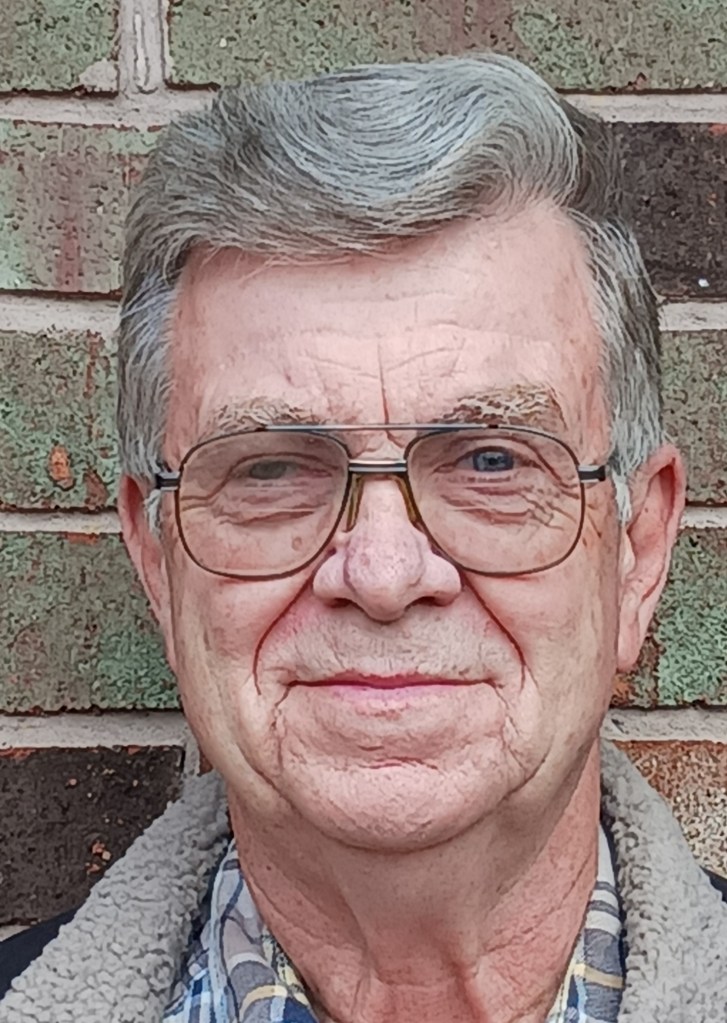
Yancey was hesitant to submit the manuscript for his first novel for publication, and was further reticent to write another book. But upon receiving eager response from many readers, he complied with requests for a second novel. Will there be a third? Well, that remains to be seen.

Here are Charles Yancey’s own words. “For me, writing is a rewarding pastime. Although it’s demanding on time and effort, it can still be very satisfying. Everyone has a story. You might think no one is interested in hearing or reading yours, but that may not be true. Millions of people spend hours reading every day. People want to hear about adventures, hobbies, vocations, vacations, etc. that other folks have. It’s a way they can experience adventure and excitement that they, for many reasons, cannot encounter. And listen: the older generations have stories many young people would appreciate hearing. The key is telling them in an exciting way.

“I wish I had, in print or recording, the accounts I’ve heard from my parents, grandparents, and in-laws. But I don’t, so at least I’ll share my own stories for my family and friends. I think you should do it, also. You might be as surprised as I was at the results.

“And you might allow P&L Publishing and Literary Services to help you, as they did me. They do a great job.”
Tip #4

What is your job, your function as a writer? Do you write poetry or prose? If you write prose, what genre do you favor If you write novels, you probably tell stories. James A. Michener was a storyteller, and he excelled at it.

Tip #4. “The job of a storyteller is to tell stories, and I have concentrated on that obligation.”

And Mr. Michener did an outstanding job! You might have noticed that his novels are long. For example, Texas has 1,474 pages, and Hawaii has 1,490 pages. But he conducted extensive research, he did his homework, and rewrote them several times with editorial assistance. The first printing of Texas was 750,000 copies.

But don’t try to copy Mr. Michener. Don’t try to write long stories. Instead write what you feel comfortable with. Be yourself, establish your voice and your style, do your homework, give yourself time to excel. But write! And you may be thrilled with the results if you …

Write Creatively.

Tip #3

James Michener read many other author’s writings. Not that he wanted to copy them – not at all. But reading other’s writings helps us establish our literary direction and form our own voice.

Tip #3. “I think the crucial thing in the writing career is to find what you want to do and how you fit in. What somebody else does is of no concern whatever except as an interesting variation.”

Learn to write well. You must study and practice, but be your own person. Develop your own style. Excellent writing normally does not materialize overnight. As one mentor suggested: write – write – write – and keep on writing.

So, go ahead and dream about becoming a famous writer, but invest the time to help you reach your goal. And don’t forget to learn how to …

Write Creatively.

Tip #2

Mr. Michener understood that first drafts are never to be published. He thought, as I do, that it’s easier to correct something already written than it is to write it correctly the first time.

Tip #2. “I have never thought of myself as a good writer. Anyone who wants reassurance of that should read one of my first drafts. I’m not a very good writer, but I’m one of the world’s great rewriters.”

So, get your first draft written, and don’t be concern about making it perfect as you write. It’s the rewriting – sometimes rewriting several times – that makes it good. You might need an editor, as Michener did, and P&L has an excellent editor you can call on.

So, set up your plan, start writing, and …

Write Creatively.

Tip #1

James A. Michener was a prolific writer, and several of his books became movies, such as South Pacific and Sayonara. Read Mr. Michener’s tips numerous times and let them become part of your thinking.

Tip #1. “The rules seem to be these: if you have written a successful novel, everyone invites you to write short stories. If you have written some good short stories, everyone wants you to write a novel. But nobody wants anything until you have already proved yourself by being published somewhere else.”

In today’s culture, the best place might be to self-publish. One of my clients has published several books through us, P&L Publishing and Literary Services, two of which are selling like hot cakes. She has proven herself – as Michener mentioned – and a major company negotiated with her to write more.

We at P&L Publishing and Literary Services are here to help you achieve your dream. You may contact us through the Get in Touch button found above. So, keep dreaming, and keep writing, but …

Write Creatively.

Writing Wisdom from James A. Michener

Do you daydream about becoming a famous writer earning a big paycheck from a profusion of royalties? Well, don’t give up on the dream, but I’d like to pass along several tips I’ve gleaned from James A. Michener – author of Hawaii, Texas, Centennial, and many others. I’ll share some of them with you this week, and the first tip will come out tomorrow.

They will not be in an order that Mr. Michener proposed, but in the order they cross my mind. Oh, and don’t think in terms of instant success – that rarely happens. However, the story you want to write is important, but learn to write well so that others will want to read it. Learn to …

Write Creatively.

What’s Your Chosen Writing Genre?

Three days ago, I said “I’ll talk about Documentary Historical Fiction another time.” Well, this is the time.

The online Britannica defines historical novel as a novel that has as its setting a period of history that attempts to convey the spirit, manners, and social conditions of a past age with realistic detail and fidelity to historical fact. The definition is good, but that is rarely what we find.

That presents a problem for truly historical fiction writers because readers may not know whether our writing is credible or not. Allow me to introduce Dr. Maier.

Dr. Paul L. Maier (https://www.paulmaier.com) is the Russell H. Seibert Professor of Ancient History at Western Michigan University and a much-published author of both scholarly and popular works. 

Relating to his works of historical fiction, Dr. Maier said in the preface of The Flames of Rome, “I have not tampered with known facts in retelling it – unlike almost all historical novelist – nor invented characters that could never match the kind who actually lived in this area…. But here as elsewhere in ancient history, yawning gaps in the original sources prevent any telling of the full story. I have tried to fill these in by devising a genre which I call the “documentary novel,” resorting to fiction for such connective material as well as dramatization, dialogue, and sub-plot to flesh out the story and bring its characters to life.”

Every person Dr. Maier named was a real person, but every character he created received no name in his books. Unless noted in the appendix otherwise, every event he described was actual. He constructed “history” only where there was no evidence for an event, but he remained true to life in that time frame.

I’m adding documentary historical fiction to my favorite genre list. That will help me to …

Write Creatively.

Lightning is Intriguing

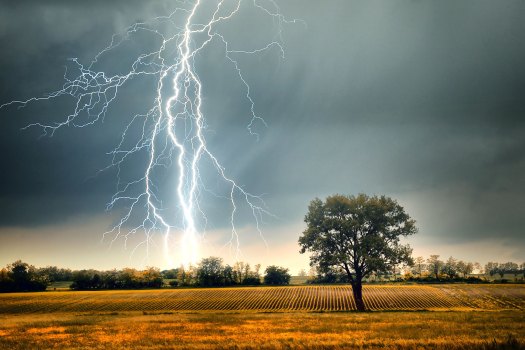
Two nights ago, a lightning storm passed over our town. I didn’t think much about it because I didn’t see the flashes or hear the thunder. I was sound asleep. But my office, which is located about 70 feet behind the house, felt the current. My computer was not plugged into the wall and my external hard drive was also detached, so everything should have been okay.

However a mystery awaited me.

Entering the office, I found one circuit breaker in the OFF position, but nothing was smoked. However, when I powered up the computer, I discovered that all the typing I had done and saved for the past two days was missing. Gone. Evaporated. Deleted. Nothing else was missing or damaged and the computer still worked fine. Lightning sure is intriguing.

I have an idea of WHY some information was deleted, but why was the work done ONLY in the past 2 days affected? Hmmmmm. . . . . . . . . . . . .

I’ll analyze the event and figure it out eventually, but for now, I need to reclaim the evaporated information. I’ll chat later. Have a productive day, and be sure to ……

Write Creatively.

That’s Hard to Believe!

A friend – I’ll call him Jim – called and asked me to meet him for coffee.

After taking a sip, Jim got right to the point. “How long is it supposed to take to get a book published?”

He seemed a little aggravated. “What’s up, Jim?”

“I’ve tried to contact several publishing companies, but most don’t accept phone calls. Other online services won’t give the information I need unless I answer a ton of questions, and even then, the answers are conditional. I finally got someone to talk with me, but I wasn’t happy with the answers. Will you tell me straight up, how long it will take for you to publish my book, and what it will cost?”

“Okay, Jim, here it is. If you have the document complete and edited to your satisfaction before giving it to me, I can have it completed and back to you for review and approval in less than a week – perhaps in 3 days. If you do not request changes, I can have the manuscript uploaded into the Amazon/KDP system within 24 hours after your approval. It then will enter Amazon’s 72-hour review; however, it often takes around 48 hours. Altogether, from the time we start the process, your book can be ready for purchase in less than two weeks. And the cost? P&L Publishing and Literary Services’ fee of $750 gets you a print book of up to 500 pages and an eBook. A book cover is included at no extra charge. Is that straight up enough for you?”

“Wow! That’s hard to believe!”

Blogger’s note: we published his book. And by the way, he did …

Write Creatively.