Tip #1

James A. Michener was a prolific writer, and several of his books became movies, such as South Pacific and Sayonara. Read Mr. Michener’s tips numerous times and let them become part of your thinking.

Tip #1. “The rules seem to be these: if you have written a successful novel, everyone invites you to write short stories. If you have written some good short stories, everyone wants you to write a novel. But nobody wants anything until you have already proved yourself by being published somewhere else.”

In today’s culture, the best place might be to self-publish. One of my clients has published several books through us, P&L Publishing and Literary Services, two of which are selling like hot cakes. She has proven herself – as Michener mentioned – and a major company negotiated with her to write more.

We at P&L Publishing and Literary Services are here to help you achieve your dream. You may contact us through the Get in Touch button found above. So, keep dreaming, and keep writing, but …

Write Creatively.
Writing Wisdom from James A. Michener

Do you daydream about becoming a famous writer earning a big paycheck from a profusion of royalties? Well, don’t give up on the dream, but I’d like to pass along several tips I’ve gleaned from James A. Michener – author of Hawaii, Texas, Centennial, and many others. I’ll share some of them with you this week, and the first tip will come out tomorrow.

They will not be in an order that Mr. Michener proposed, but in the order they cross my mind. Oh, and don’t think in terms of instant success – that rarely happens. However, the story you want to write is important, but learn to write well so that others will want to read it. Learn to …

Write Creatively.

What’s Your Chosen Writing Genre?

Three days ago, I said “I’ll talk about Documentary Historical Fiction another time.” Well, this is the time.

The online Britannica defines historical novel as a novel that has as its setting a period of history that attempts to convey the spirit, manners, and social conditions of a past age with realistic detail and fidelity to historical fact. The definition is good, but that is rarely what we find.

That presents a problem for truly historical fiction writers because readers may not know whether our writing is credible or not. Allow me to introduce Dr. Maier.

Dr. Paul L. Maier (https://www.paulmaier.com) is the Russell H. Seibert Professor of Ancient History at Western Michigan University and a much-published author of both scholarly and popular works. 

Relating to his works of historical fiction, Dr. Maier said in the preface of The Flames of Rome, “I have not tampered with known facts in retelling it – unlike almost all historical novelist – nor invented characters that could never match the kind who actually lived in this area…. But here as elsewhere in ancient history, yawning gaps in the original sources prevent any telling of the full story. I have tried to fill these in by devising a genre which I call the “documentary novel,” resorting to fiction for such connective material as well as dramatization, dialogue, and sub-plot to flesh out the story and bring its characters to life.”

Every person Dr. Maier named was a real person, but every character he created received no name in his books. Unless noted in the appendix otherwise, every event he described was actual. He constructed “history” only where there was no evidence for an event, but he remained true to life in that time frame.

I’m adding documentary historical fiction to my favorite genre list. That will help me to …

Write Creatively.

Lightning is Intriguing

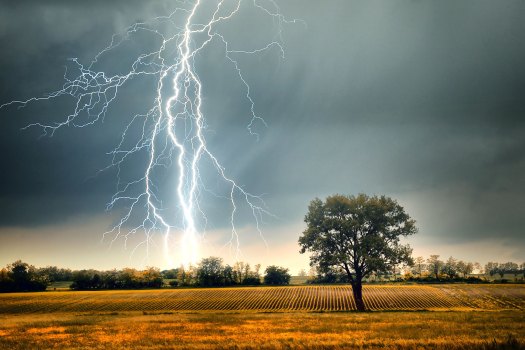
Two nights ago, a lightning storm passed over our town. I didn’t think much about it because I didn’t see the flashes or hear the thunder. I was sound asleep. But my office, which is located about 70 feet behind the house, felt the current. My computer was not plugged into the wall and my external hard drive was also detached, so everything should have been okay.

However a mystery awaited me.

Entering the office, I found one circuit breaker in the OFF position, but nothing was smoked. However, when I powered up the computer, I discovered that all the typing I had done and saved for the past two days was missing. Gone. Evaporated. Deleted. Nothing else was missing or damaged and the computer still worked fine. Lightning sure is intriguing.

I have an idea of WHY some information was deleted, but why was the work done ONLY in the past 2 days affected? Hmmmmm. . . . . . . . . . . . .

I’ll analyze the event and figure it out eventually, but for now, I need to reclaim the evaporated information. I’ll chat later. Have a productive day, and be sure to ……

Write Creatively.

That’s Hard to Believe!

A friend – I’ll call him Jim – called and asked me to meet him for coffee.

After taking a sip, Jim got right to the point. “How long is it supposed to take to get a book published?”

He seemed a little aggravated. “What’s up, Jim?”

“I’ve tried to contact several publishing companies, but most don’t accept phone calls. Other online services won’t give the information I need unless I answer a ton of questions, and even then, the answers are conditional. I finally got someone to talk with me, but I wasn’t happy with the answers. Will you tell me straight up, how long it will take for you to publish my book, and what it will cost?”

“Okay, Jim, here it is. If you have the document complete and edited to your satisfaction before giving it to me, I can have it completed and back to you for review and approval in less than a week – perhaps in 3 days. If you do not request changes, I can have the manuscript uploaded into the Amazon/KDP system within 24 hours after your approval. It then will enter Amazon’s 72-hour review; however, it often takes around 48 hours. Altogether, from the time we start the process, your book can be ready for purchase in less than two weeks. And the cost? P&L Publishing and Literary Services’ fee of $750 gets you a print book of up to 500 pages and an eBook. A book cover is included at no extra charge. Is that straight up enough for you?”

“Wow! That’s hard to believe!”

Blogger’s note: we published his book. And by the way, he did …

Write Creatively.

What Are Your Preferred Genres?

Bible, science, and history have been my chosen genres for the past 45 years. However, within the past 3 years I adopted Creative Nonfiction, and am considering Documentary Historical Fiction.

The shortest definition of Creative Nonfiction is: a true story well told. Best selling author, mentor, and instructor Lee Gutkind said, “I am often asked: ‘What is creative nonfiction?’ Memoir, for example, personal essay, biography, narrative history, and long form narrative reportage may all fit under the creative nonfiction umbrella. Writers who write creative nonfiction are very different in voice, orientation and purpose. But what they have in common is that they are, in one way or the other, writing true stories that provide information about a variety of subjects, enriched by relevant thoughtful ideas, personal insight, and intimacies about life and the world we live in. And this scope and variety is exactly what makes creative nonfiction significant and, these days, so incredibly popular.”

Creative nonfiction involves descriptive narrative, but we need to be careful not to overdo the verbosity. However, this genre – used correctly – vies for first place with fiction for popularity. Look up Lee Gutkind and learn more.

‘ll talk about Documentary Historical Fiction another time. In the mean time …

Write Creatively.

You Might Want to Know …

One of our readers recently emailed us with a few questions. I want to share the primary question with you because it seems that many people don’t know this bit of info.

Can changes be made to my book after it’s published? And if so, how do we go about it?

The first answer is “Yes. We can modify anything we publish.” Working with us, P&L Publishing and Literary Services, the author never loses ownership of his or her work. Therefore, the author can ask for changes any time … even many years later.

The second answer is also easy. Just send us a document listing what you want to modify, and we’ll make the changes. But please note: we cannot change anything we did not publish.

There most likely will be a fee involved, and the fee will depend on the nature and complexity of the changes.

One of the benefits working with P&L is that we try to make things easy for our authors. When you call, you will talk with a live, breathing, friendly person. Have a great week, and …

Write Creatively.

Tonight, Change Your Clocks

Don’t forget: tonight at 2 AM, we lose an hour. But don’t lose sleep over losing sleep; plan ahead and relax. Unless Congress changes things, you’ll get that lost hour back at 2 AM on Sunday, November 3, 2024.

In the mean time …

Write Creatively.

Don’t Quit Writing – Just Change Directions

In 1982 I started writing a book about ancient Middle-eastern history. I enjoy studying about Abra … what did you say? Did I finish it?

Well, not quite. I mean, no. I have perhaps over 500 pages of research on it, and have written 18 chapters. But often an idea for change hits my mind, and I stop work on the project until the change has been understood, resolved, and implemented. Apparently I am not ready to finish this one, yet.

What have I been doing? Well, I’m glad you asked. I have written 4 other books, and 2 more are on the drawing board. But I will eventually finish this one.

No, I’m not wasting time, and I haven’t given up on that book. If you know me, I don’t give up on anything I put my hands to. However, I do change directions at times. It might surprise you to know that I’ve also written for newspapers for over 22 years, and I now format and publish books for people.

But forget that. What I’m trying to get across is the following: Writers don’t stop writing just because ideas stop flowing. Writing is what we do. So we put one project aside and start another, or continue on another that’s been waiting for us.

So, don’t get stressed out if what you are writing doesn’t seem to be flowing. Don’t toss it away. Save it – most likely on your computer – because the idea might come alive later. But don’t stop writing. It is okay to have several projects going simultaneously. When you feel like stopping on one book, work on another one. You will eventually have several books written. And don’t forget to …

Write Creatively.

But now that I think of it, I stopped on the Middle-eastern book when Abram was summoned to the palace of King Ibbi-Sin (pronounced “Eebbee-Seen), and Abram sensed danger. … I think I’ll get back on that project.

Hey, don’t stop writing. If you need help, contact me, and we’ll talk about your project.

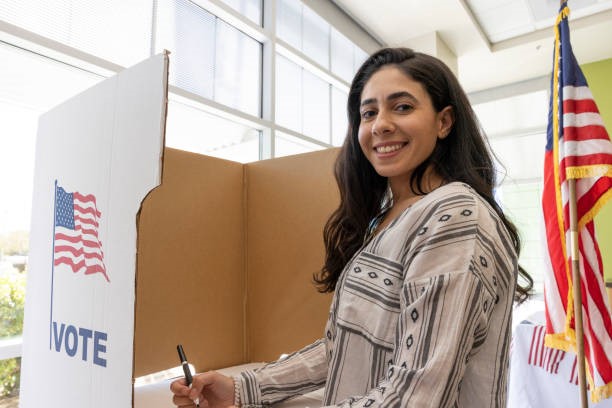
Did you Vote?

Did you make it to the voting polls on Super Tuesday? Did your candidates win?

I’m not supposed to talk about voting … or am I? Let me remind you: everything that happened, is happening, or might yet happen can be written about. I wrote for newspapers every week – sometimes several times a week – for over 22 years, and never ran out of subject material. Some of my acquaintances wrote five articles a week and never missed a deadline.

I’ve read about some authors who write a book a month. Now THAT’s what I call BUSY! When I asked one man if he ever got writers’ block, he laughed. “I don’t have time for writer’s block. I have work to do.”

You, also, don’t need to worry about writer’s block. If you get stuck, take a break. Or write about something else for a while. Our minds eventually clear – usually with more detail to write about – and we can proceed.

Learn to stay busy, but learn to enjoy the process. Have fun while writing, and make sure that you …

Write Creatively.

So, did you vote? I did. I may not have liked some of the results, but I will still do my best for society. I hope you do, too.