Resistance Slows Us Down

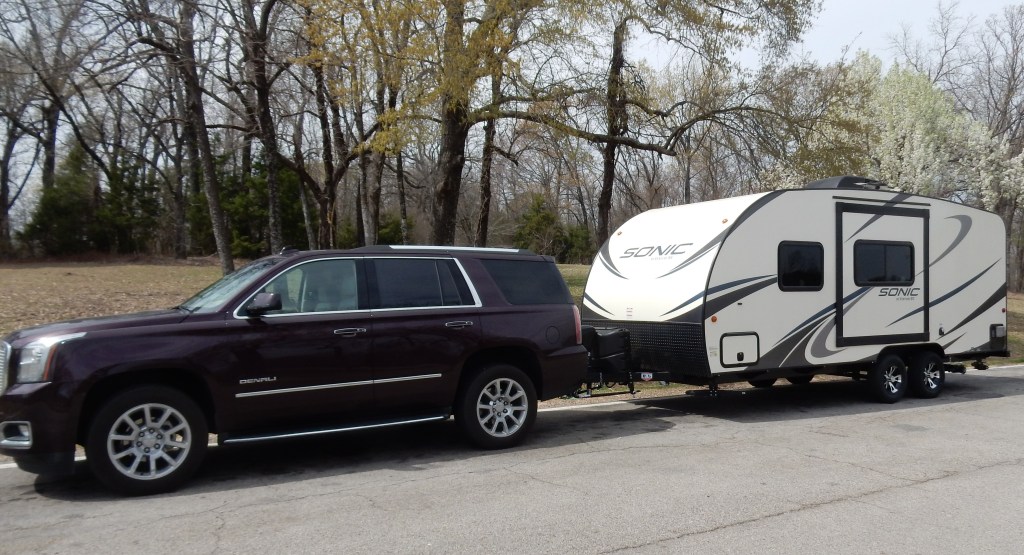
We’re on our way to Southern California where we’ll spend two months teaching and helping others. Our 2017 Yukon gets up to 25 mpg on the open road, but when pulling an RV, our mileage usually drops to 10-14. It depends on the conditions. But this trip was different.

From western Oklahoma, through the Texas panhandle, and into New Mexico, we hit a powerful headwind that took our mileage down to 9 mpg. In some areas, we encountered a powerful crosswind that blew one large truck off the highway and rolled it onto its side.

Wind is often a powerful resistance, and we have to adjust our driving habits to assure that we drive safely. But other situations present other types of hindrances.

Unexpected obligations and responsibilities are other types of resistances. This trip is one of them. As mentioned above, I am traveling now and will be busy teaching and mentoring for two months, and that will require some of the time I have invested in writing these blogs.

You may have noticed that I’ve missed several days already. Therefore, until the middle of July, I will probably write 2 blogs a week rather than my usual 5.

You writers and authors also encounter resistances in your writing. Yes, you are also slowed down at times, but don’t allow the hindrances to stop you completely, and don’t become discouraged.

Fulfill your obligations and meet your responsibilities. But do continue to set time aside to continue your writing, and when you do, make sure you …

Write Creatively.
Lightning is Intriguing

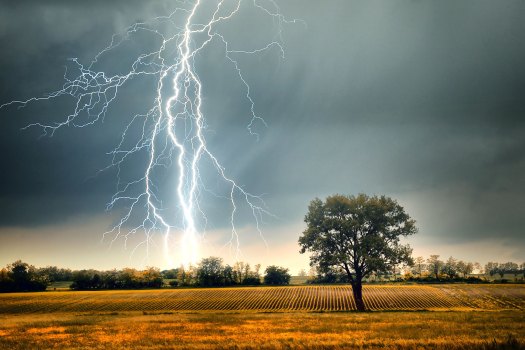
Two nights ago, a lightning storm passed over our town. I didn’t think much about it because I didn’t see the flashes or hear the thunder. I was sound asleep. But my office, which is located about 70 feet behind the house, felt the current. My computer was not plugged into the wall and my external hard drive was also detached, so everything should have been okay.

However a mystery awaited me.

Entering the office, I found one circuit breaker in the OFF position, but nothing was smoked. However, when I powered up the computer, I discovered that all the typing I had done and saved for the past two days was missing. Gone. Evaporated. Deleted. Nothing else was missing or damaged and the computer still worked fine. Lightning sure is intriguing.

I have an idea of WHY some information was deleted, but why was the work done ONLY in the past 2 days affected? Hmmmmm. . . . . . . . . . . . .

I’ll analyze the event and figure it out eventually, but for now, I need to reclaim the evaporated information. I’ll chat later. Have a productive day, and be sure to ……

Write Creatively.

Fulfilling Your Dream of Writing – Step 3

You established your place to write, and are working on developing your writing routine. Today let’s talk about Deciding on a Theme.

Have you ever heard the phrase, “flying by the seat of his pants?” That refers to an airplane pilot who doesn’t file flight plans. He just flies his plane in the direction he thinks he needs to go, and expects to get there. But events outside his control such as inclement weather and physical problems with the plane can generate life-threatening situations. A flight plan can save his life, or at least get him back on track.

There are actually 2 parts of the flight plan: 1) where he wants to go, and 2) how he’s going to get there.

Some people “write by the seat of their pants.” Some of them thrive in it, but some writers flail in confusion because of it. They don’t have a direction, or a theme.

Now, to understand what a theme is, let’s look at that flight plan.

1) Where the pilot wants to go would be the theme (the underlying message the author is trying to convey to the reader), and 2) how he’s going to get there is the plot (the structure that the storyteller uses to show how the events are connected).

Let’s turn it around.

If someone asks you what’s your story about, and you say, “It’s a story about an angry man who robs banks, is arrested, but is befriended by the policeman who arrested him,” that’s the plot of the story. But if you say, “It’s about love overcoming hate,” that’s the theme.

The theme is the central message behind the story. It connects all the major ideas in the book together.

While the plot tells what happens in the story, the theme explains why it happens. It gives meaning to the story. Without a theme, your story is a recording of actions and events, but it doesn’t explain why these actions happen. Most likely you have a plot in mind, but deciding on a theme will help keep you on track.

I’ll see you tomorrow.

Write Creatively

Fulfilling Your Dream of Writing

Have you found it difficult to write a book? I understand, because in the past I had a hard time writing a simple blog. But listening to and reading from professional writers has set me free.

Writing is an expression of who you are and what you believe. Writing a Sunday School lesson, a blog, a letter to a friend, or a book is a series of word-pictures. If you write your story well, the readers should be able to see the action in their mind. They should almost see Moses standing in front of the Pharaoh, feel the tug of fish on the line, hear the sound of the gun, smell the perfume in the air or the smoke from the fire. But you, the author, must spell it out so the reader can enter the story.

Therefore, you need to create the atmosphere for yourself so that YOU can enter the story as you write it. And that’s a major key to good writing – enter and live the story as you write it.

Come back tomorrow and start learning these 8 ideas that have made my writing life a lot easier. And please feel free to copy them.

Write Creatively.