Life is Changing for a Lot of People

What’s happening? Approximately 3.7 million young adults are graduating from high school, around 4 million are graduating from college, and about 1.65 million will continue to pursue their masters degree. Oh yes, and about 30% of the American work force will change vocations.

Life is definitely changing!

Another thought to consider: about 80% of our population would like to write a book to record their thoughts, memories, and stories, but only about 3% actually do it. Why only 3%?

It takes time, and many folks feel intimated at what they think is a complex process. But I have good news for you.

Yes, it takes time, but we at P&L Publishing & Literary Services can coach and mentor you in the process. What about the complexity? We at P&L handle that easily and you won’t have to worry about it.

So if you are part of that 80% who would like to write a book, let P&L help you become part of the 3% who are successful. Our award-winning staff will turn your manuscript into a beautiful book that you’ll be proud of.

Contact us at https://plpubandlit.org/ and click on Formatting Services learn more. Then click on the Get in Touch button to start the process, and be sure to …

Write Creatively. (Our editor will help you.)

More Reasons Why People Write…

Writing is tedious; it requires patience and enthusiasm. With that in mind, many writers are creative geniuses who change people’s lives. Here are some of the reasons why writers are truly inspiring.

Writing conveys emotion, intellect, and creativity. Reading a well-written novel, poem, or devotional can lift us out of the doldrums of life, lift us to a higher plane, and help us to see beyond our mental and physical boundaries.

So if you have any desire to write, if you’ve ever considered it, or if you are in the process of writing right now, think of your reader and take him or her on an enjoyable or exciting journey.

It takes a lot of enthusiasm to become a good writer. Let your readers feel that enthusiasm, and you accomplish that goal by …

Writing Creatively.

Writing Wisdom from James A. Michener

Do you daydream about becoming a famous writer earning a big paycheck from a profusion of royalties? Well, don’t give up on the dream, but I’d like to pass along several tips I’ve gleaned from James A. Michener – author of Hawaii, Texas, Centennial, and many others. I’ll share some of them with you this week, and the first tip will come out tomorrow.

They will not be in an order that Mr. Michener proposed, but in the order they cross my mind. Oh, and don’t think in terms of instant success – that rarely happens. However, the story you want to write is important, but learn to write well so that others will want to read it. Learn to …

Write Creatively.

Don’t Quit Writing – Just Change Directions

In 1982 I started writing a book about ancient Middle-eastern history. I enjoy studying about Abra … what did you say? Did I finish it?

Well, not quite. I mean, no. I have perhaps over 500 pages of research on it, and have written 18 chapters. But often an idea for change hits my mind, and I stop work on the project until the change has been understood, resolved, and implemented. Apparently I am not ready to finish this one, yet.

What have I been doing? Well, I’m glad you asked. I have written 4 other books, and 2 more are on the drawing board. But I will eventually finish this one.

No, I’m not wasting time, and I haven’t given up on that book. If you know me, I don’t give up on anything I put my hands to. However, I do change directions at times. It might surprise you to know that I’ve also written for newspapers for over 22 years, and I now format and publish books for people.

But forget that. What I’m trying to get across is the following: Writers don’t stop writing just because ideas stop flowing. Writing is what we do. So we put one project aside and start another, or continue on another that’s been waiting for us.

So, don’t get stressed out if what you are writing doesn’t seem to be flowing. Don’t toss it away. Save it – most likely on your computer – because the idea might come alive later. But don’t stop writing. It is okay to have several projects going simultaneously. When you feel like stopping on one book, work on another one. You will eventually have several books written. And don’t forget to …

Write Creatively.

But now that I think of it, I stopped on the Middle-eastern book when Abram was summoned to the palace of King Ibbi-Sin (pronounced “Eebbee-Seen), and Abram sensed danger. … I think I’ll get back on that project.

Hey, don’t stop writing. If you need help, contact me, and we’ll talk about your project.

Did you Vote?

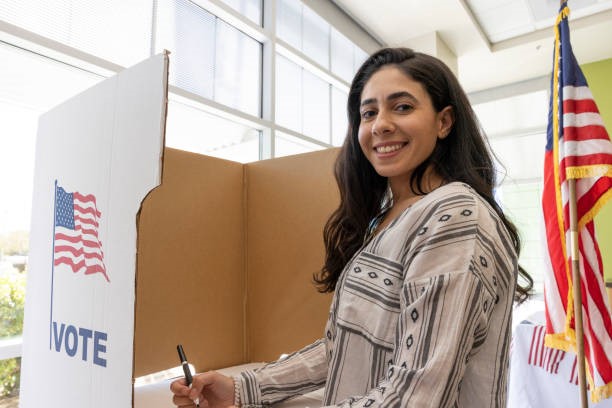
Did you make it to the voting polls on Super Tuesday? Did your candidates win?

I’m not supposed to talk about voting … or am I? Let me remind you: everything that happened, is happening, or might yet happen can be written about. I wrote for newspapers every week – sometimes several times a week – for over 22 years, and never ran out of subject material. Some of my acquaintances wrote five articles a week and never missed a deadline.

I’ve read about some authors who write a book a month. Now THAT’s what I call BUSY! When I asked one man if he ever got writers’ block, he laughed. “I don’t have time for writer’s block. I have work to do.”

You, also, don’t need to worry about writer’s block. If you get stuck, take a break. Or write about something else for a while. Our minds eventually clear – usually with more detail to write about – and we can proceed.

Learn to stay busy, but learn to enjoy the process. Have fun while writing, and make sure that you …

Write Creatively.

So, did you vote? I did. I may not have liked some of the results, but I will still do my best for society. I hope you do, too.

What will Readers “Take Home” from Reading Your Book?

As a pastor, I always gave everyone in attendance something to “take home.” Whatever the listener’s background, be it Christian, atheist, philosopher, scientist, mechanic, writer, or whatever, I wanted the listeners to learn something that was meaningful to him or her. Why?

I didn’t like asking people to come back; I wanted them to come back because they desired to hear more. As a result, the attendance in our churches grew substantially.

In the same way, writers must make a lasting impression in the readers’ minds. With thousands of books to choose from, we must give them a reason to want more of our writing. A good, well-written, compelling story will draw the reader back for more. Identify your target audience, and learn to write so that your story will live on in their hearts and minds long after the last page has been turned.

Write Creatively.

Write for a Win-Win

When was the last time you heard someone say, “That’s a Win-Win?” That doesn’t work in baseball, football, basketball, and all the other sports. For a team to win, the other team has to lose, and for some reason people don’t like losing.

Okay, you know that. But how does win-win apply to writing? I’m glad you asked.

The answer is based on understanding. Author, speaker, and mentor Stephen R. Covey said in Habit #5 in his book, The 7 Habits of Highly Effective People, “Seek First to Understand, Then to Be Understood.” Learning to actively understand someone else and his/her point of view is mandatory to effectively communicate our thoughts.

That’s why we must know our target audience. We need to understand their interests, goals, needs, etc. If we understand them, our writing can appeal to them. They will enjoy our writing and we will sell more books. That is a Win-Win.

So invest the time necessary to establish and understand your target audience. You must write YOUR story in a manner that THEY understand and appreciate it.

That is the writers’ Win-Win. So make sure you …

Write Creatively

Long-Term Benefits

In my high school days, I sometimes stayed up all night trying to get ready for a test. While I might have passed the test, I didn’t remember much. I eventually learned that spending time gaining temporary benefits often resulted in an overall loss, but investing time paying continuous, daily attention to life provided long-term dividends. Therefore, I began developing good study habits.

How do I apply that to writing? I’m glad you asked.

Don’t expect to sit down and write your book overnight. Be Proactive. Don’t create or accept excuses for lack of progress. Respond properly to situations, but stop being overly concerned about things over which you have no control. Don’t get stressed, but focus on what you need to be doing.

Take that vacation. Enjoy your anniversary. Spend time with family. But don’t forget that blogs and books don’t write themselves.

Can you write your book in a month? Yes, it’s possible. Some people know what they want to write and can write fast. If you are writing a novella (18,000 – 40,000 words) or a nonfiction book, it is possible to finish a book in 30 days if you are dedicated and consistent with your writing sessions.

So determine your goal, establish your pace, and identify a good editor. Author, speaker, and teacher John Bytheway said, “Inch by inch, life’s a cinch. Yard by yard, life’s hard.”

Remember that P&L Publishing and Literary Services (plpubandlit.org) is here to assist you. And don’t forget to …

Write Creatively

Energize Your Writing

Do you know that your choice of words is as important as how you use them? Also, writing a compelling sentence often has a higher priority than writing a literally correct sentence. These concepts are part of what makes the editing process so powerful, and what makes the editor so valuable. Identifying weak areas and refining/editing the work can transform a good story into a great story.

The following is an example of weak narrative.   

George looked out the window. He saw an airplane flying very low, and wondered if it would make it to the airport. 

The author should find a way to infuse life into the narrative. There are many ways that can be accomplished, and here is one idea:

George couldn’t believe what he saw. “You’ll never make it to the airport; the plane is too low! Bring it up!” George yelled at the closed window. He couldn’t hear the crash, but a massive fireball and cloud of black smoke erupted as the commercial airliner plowed into the forest at 165 mph.

Changing the sentence structure not only energized the narrative, it also added depth to the story. This kind of writing prompts readers to keep turning the pages.

Let’s not waste our time by writing boring stories for bored people. Let’s offer them a dynamic adventure by …

Writing Creatively

I’m Going to Write a Book …

Do you hear people saying that? Are you saying it?

If “yes” is the answer in either question, what does it mean? I’ll tell you. It means the book isn’t being written. And in many situations, it won’t be written for some time. In order to write a book, the proposed author must decide to get moving. For example …

An airplane, be it propeller-driven or jet powered, can sit on the runway for years and never fly if it doesn’t move. And if it does move, it must reach a critical speed related to it’s type and weight to lift off the ground. (Note: I am not referring to anyone’s size or weight.)

A watercraft, be it a kayak or a nuclear-powered aircraft carrier, has a critical speed for the rudder to take effect. If the craft moves, but hasn’t reached its critical speed, the helmsman can turn the rudder all he wants to, but the boat or ship will not turn.

Writing a blog or book is similar: we can talk about it all we want to, but if we don’t get moving, it will not get written. And if we do move, we must “reach that critical speed” to see our situation change.

So, what are you going do? Change your thinking and you will change your activity. Then you can say, “I’m writing a book.” And then …

Write Creatively