Out of Shape!

Carol and I had been in California for several months while I was helping a church through a major change. During that time, although I did walk an average of 2 miles per day, I did very little other exercise. Arriving home, I had the satisfaction of helping a church and many folks who were associated with it, but I was not satisfied with myself.

I was physically out of shape.

What was worse, I found that I didn’t want to put out the effort to get back into my pre-trip routine. But willpower and diligence are winning the battle. I can now play a couple of games of racquetball with our 42-year-old son without suffering exhaustion.

The same kind of problem develops when we get out of our writing routine. We lose our edge, our creativity diminishes, and we may become emotionally exhausted as we attempt to get back into shape. But willpower and diligence can help us. And YES! It takes both.

If you’re trying to get back into your writing routine, start with a couple of short stories. Don’t plan on publishing them, just write for the practice. Who knows … they might turn out to be more than you imagined and could be your next books.

So be sure to …

Write Creatively.

By the way, I should tell you: Michael still beats me in racquetball, but we have a grand time! One time he hit the ball so hard that it blew out like an exploding tire!

Actively Listening Enhances Our Writing

In my previous blog I said that learning to actively listen can make us a better writer. Let’s look into it.

In her book, Listening: Its Impact at All Levels on Reading and Other Language Arts (1979), Sara Lundsteen said, “Listening is the foundation for speaking, which is the foundation for reading, which is the foundation for writing.” She taught that since listening is a foundation for writing, active listening can further enhance the author’s writing. I want to follow up on that.

Actively listening to others – rather than passively listening, or interrupting – can increase our vocabulary. An increased vocabulary allows us to give people in our stories a wider range of expression.

Actively listening to others can teach us how others think. Learning how others think allows us to create a greater number of characters, with wider intellectual capacity, and a more complex personality. That, in turn, can give us the potential for a much more interesting story.

But actively listening also helps us personally. I found that when I learned how to actively listen, without interrupting, I began interacting on a more mature level, and people began asking for my thoughts and opinions. By listening, I gained a broader audience and became a better writer.

Listening will help you too, and help you to …

Write Creatively.

Where do I start?

Sometimes when we sit down to write, we get lost and wonder, “Where do I start?”

One answer: Choose a natural starting point.

When we read a good novel, it all seems to unfold so naturally from the first sentence, so why do we have a difficult time getting started? We need to remind ourselves that famous authors are faced with the same problem. Don’t laugh now, but they have editors to help them, too.

Think about real life. No significant episode in your own life sprung up from nothing; things happened that shaped the current event, and things happened afterward as a result of it. Think about your story in the same way. The characters have pasts and futures (unless you plan to kill them). Places, too, have pasts and futures. Therefore, every good storyteller jumps into his story midstream. Knowing this can help you relax about picking a starting point.

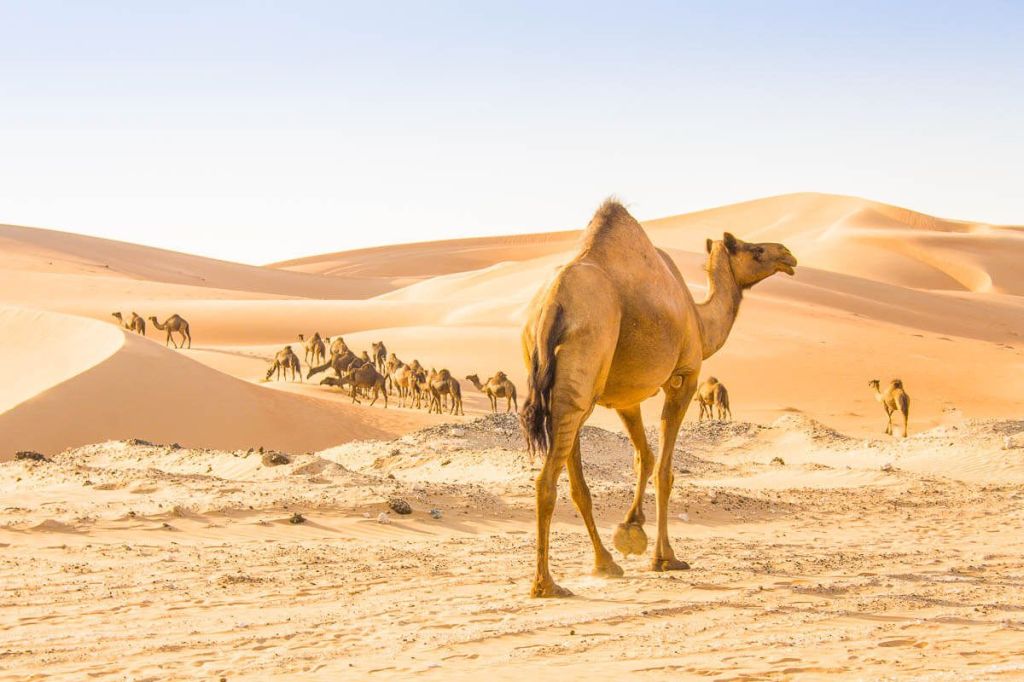
For example, I’m writing about Abraham, and I start with him as an adult in the desert with his camel when God speaks to him. Abe begins mulling over world events and planning his escape from Ur of the Chaldees without being caught. With that setting as my anchor, I build the story.

If you’re unsure where to begin, pick a scene you know you’re going to put in—you just don’t know where yet—and start writing it. You might discover your Chapter One right there. And even if you don’t, you’ll have story material for that scene when the time comes.

Or……

Write several character sketches. You need them anyway, and they’re great warm-ups for Chapter One. Ask yourself: What will this character be doing when we first meet him? Write it. Again, you might find yourself writing Chapter One…or Chapter three. But start.

Your could even do a Chapter-One-Only brainstorm and see what comes out.

You can write a great story starting from any of several places. But wherever it is, start with action! That will help you to …

Write Creatively.

More Reasons Why People Write…

Writing is tedious; it requires patience and enthusiasm. With that in mind, many writers are creative geniuses who change people’s lives. Here are some of the reasons why writers are truly inspiring.

Writing conveys emotion, intellect, and creativity. Reading a well-written novel, poem, or devotional can lift us out of the doldrums of life, lift us to a higher plane, and help us to see beyond our mental and physical boundaries.

So if you have any desire to write, if you’ve ever considered it, or if you are in the process of writing right now, think of your reader and take him or her on an enjoyable or exciting journey.

It takes a lot of enthusiasm to become a good writer. Let your readers feel that enthusiasm, and you accomplish that goal by …

Writing Creatively.

Here We Are in California ……

It’s raining and hailing in Arkansas where I call home; it’s sunny in north-central California where my wife is visiting our son and his family; and it is sunny where I am filling in as pastor for 2 months near San Diego.

And, yes, I continue formatting books and publishing them for folks. I get calls and emails from clients – as I did within the past half hour – telling how happy they are with the work we at P&L Publishing and Literary Services did for them.

If you are ready with your manuscript and want it transformed into a book, or if you have questions about how to proceed, contact us, and we’ll be glad to help.

Have a great day, and don’t forget to …

Write Creatively.

The Courage to Fail


An acquaintance allowed me to post his thought on why some folks won’t write.

“Through the years I have noticed a curious phenomenon. People who are experts in literature, who know grammar, who can discuss the intricacies of plotting, characterization, setting, pacing, etc., people who seem to have all the equipment necessary to succeed at writing, rarely try it. Although these people sometimes have PhDs in English and literature, they seem quite content watching hacks like me turn out numerous successful novels. I’m not complaining, you understand, but I have a theory about why this is so. These folks would be satisfied with nothing less than writing a masterpiece, and since they know that is highly unlikely, they write nothing. They are afraid they will fail. On the other hand, I have no ambitions about masterpieces–I just want to write fun books that entertain people and make a living doing it. I want to write the kind of books that I like to read. So I write and the experts read.”

So, dear reader, develop the courage to fail. But remember, the only real failure is one who doesn’t try. So sit down and begin writing that story that’s been on your mind. You will be glad you did. And you will surprise yourself to find that you can …

Write Creatively.

Why do you like to write?

What compels you to write? Is it fun? An obsession? An adventure? An escape? I asked a group of people why they wrote, and here are just a few of their responses.

Writing helps me cope with stress.

Writing allows me to go to anywhere I want to go with no restrictions.

Writing allows me to create other worlds, and kind of live in them.

Writing allows me to safely express my thoughts, worries, and anxieties.

I enjoy writing because I find fiction more interesting than the real world.

I write poetry because it helps me connect to my artistic side.

I write to give people a good story to read.

When one of the men asked me why I liked to write, I told him I write to teach about life. Among other things, that includes topics related to history, science, the Bible, humor, and philosophy.

There are hundreds of reasons people write. Why don’t you interview yourself and find out why you like to write. The answers might help you learn to improve your skill. And as you improve, always …

Write Creatively

Experiment with Genre & Style

I wrote for public newspapers in several states from 2001 through 2023. My subject matter included Bible, history, science, nature, travel, and a lot more. But I didn’t write about animals; that wasn’t my forte.

But one day in July of 2013 after relating a dynamic experience to my friend and co-writer about our kitten getting stuck in a glue trap, he suggested that I write about it in my next article. When I told him I don’t write about animals, he paused, took a sip of coffee, and said, “You do now.”

I thought that would be a challenge, but I was wrong. It was the easiest piece I ever wrote because I merely related what happened.

Did I say “merely related”? Well, that wasn’t quite true. Everything I said in the article was accurate, but I painted the word picture in a creative manner. Through well-chosen words, I let the readers “watch” the 3-month-old kitten as it …. Hey, I’ll let you read part of the writeup so you can see what I’m talking about.

Two and a half month old Marvel was playing in the sun-room. He batted his ball, it bounced behind a box, and he pounced after it. A playful kitten disappeared behind the box, but a hissing, crazed, writhing monster erupted from the other side! He had stepped into a glue trap!

He was screaming, thrashing, flipping, running from his phantom attackers, flailing and irrationally bouncing as only a cat can do, running into walls to make matters worse, and getting glue all over himself; but I was finally able to grab him to remove the source of persecution. I paid (got bit) for my efforts, but I didn’t punish him for that error: he was frantically fighting for his life!

When my co-writer saw the responses I received from readers about that story, he said, “You have added another genre to your bag of tools.” That also introduced me to the genre of Creative Nonfiction, which is described as “true stories well-told.”

So, I encourage you readers to experiment with genre and style. Remember The Cat and the Glue Trap, consider looking into and studying about Creative Nonfiction, and …

Write Creatively

Start with What You Know

Sometimes I have a difficult time starting a blog or a story. When that happens, I have a default mode – I start writing about an idea I’ve stored in my “Idea Folder” in my computer, or something I already know about. An event in my life, something I remember or saw recently, a news flash – many things can ignite the writing flame. That heats up the imagination and the story begins to flow.

If I’m writing history, I write what happened. If I’m writing fiction, I feel free to change things around. Sometimes I start with history but the flow changes direction and I revert to fiction. That’s okay.

Let your creativity out of its box and create characters that fit what’s happening in your imagination. The story can be historical, morph into historical fiction, or turn to total fiction – that’s okay. As you “see and hear” the characters floating in your imagination, your emotion will generate energy for the story. Write what you see and hear. You can – and should – always edit later.

So, if you’re having a difficult time thinking of a theme or story line, start with what you know, and …

Write Creatively

Fulfilling Your Dream of Writing – Step 6

It’s been a busy weekend but we’ll pick up where we left off yesterday with listing and naming the people in your story. You’ll probably name the more important animals, too, because animals sometimes play a major role in a story.

In a book about ancient history I’m writing, I started by making a list of about 86 names. As I wrote a page of information about each character (step 5), I added the meaning of each name, and that gave me a little more understanding of the integrity of each person in the book. Now, let’s go to the next step.

Step 6 is a very a important concept: Draw on your Imagination.

One dictionary says imagination is the ability to form a mental image of something; to image it, or to mentally see it.

Randy Ingermanson, bestselling author of numerous books, once said, “I like to start stories because I want to see how they turn out.” Guess what? It’s obvious that the “turning out” of Randy’s stories comes from his own mind, and that’s because he has a tremendous imagination.

Now don’t tell me you don’t have a good imagination because it wouldn’t be true. I tell folks that I don’t have a good imagination when it comes to art and a few other concepts, but I am quite creative – imaginative – related to many other aspects of life.

Your imagination is limitless and it’s easy to develop, but it takes time. Develop it by reading, analyzing, discussing concepts with people.

Here’s a simple example of the process of analysis. Imagine the scene and action as you read it.

If I throw a rock at a window, what will be the result? The rock is harder than glass, so the window will break. The structure of the glass could make it shatter into hundreds or thousands of pieces. The owner of the window will be angry, and want me to pay for damages, including window replacement and cleanup. I’ll lose a lot of money because of a childish, irresponsible act. The owner might tell people what I did, and my reputation will be damaged. Some people will not trust a man who throws rocks at windows, and my business would suffer, my income would diminish, and I might even be arrested. Therefore, because of that, and many other reasons, I will not throw rocks at windows.

Now, admittedly, that’s quite an elementary rationalization, but it shows the process of using imagination. Although that would not make it into my ancient history story, it could be part of a children’s book.

Now that you mention it, David, the shepherd, hurled a rock at a giant. Some of you could write a book about that. Use your imagination to fill out the story.

Keep your imagination active when developing and writing your stories. Even while writing a historical event, write it well with exciting, descriptive narrative.

I’ll see you tomorrow.

Write Creatively